Tips To Help You Drive Safely in Snow & Icy Conditions
Before You Set Off
- Remove all snow from windows and mirrors to ensure clear visibility.
- Clean snow from front and rear lights so you can see clearly and remain visible to other road users.
- Always drive with dipped headlights switched on.
- Consider what equipment to take in case you get stuck. (e.g. water, food, blankets, shovel, scraper, de-icer, battery bank, traction devices.)
Spotting Icy Conditions
- Ice can be difficult to detect as it's often transparent. Watch for shiny patches on the road surface and check whether puddles at the roadside have frozen over.
- Listen for changes in tire noise – as wet roads freeze, the sound from your tires becomes noticeably quieter.
Understanding 4x4 and AWD Limitations
- Four-wheel drive and all-wheel drive vehicles don't perform better than standard cars on ice. While the additional driven wheels provide better traction in snow, they brake using the same number of wheels as conventional vehicles. This means that although 4x4s have improved snow traction, their steering and braking capabilities remain identical. The heavier weight of many 4x4 vehicles may actually increase stopping distances, which is crucial to remember in wintry conditions.
Preventing Skids
- Smooth, gentle driving is key to avoiding skids. Stay away from rapid acceleration, sudden braking, and sharp gear changes, all of which can cause your vehicle to lose control.
Controlling Wheel Spin
- Spinning wheels make vehicle control extremely difficult. To prevent this, pull away in second gear and accelerate gradually. Shift up early to minimize wheel spin.
- If your wheels begin spinning, don't press harder on the accelerator. Instead, reduce pressure gently until the tyres regain grip, then accelerate smoothly.
- Traction control on modern cars can assist to avoid wheel spin, but your vehicle handbook may advise switching off traction control if you have snow chains or socks fitted (so check your handbook).
Effective Braking Techniques
- Apply brakes gently without locking the wheels – locked wheels prevent steering and cause the car to continue straight ahead.
- ABS systems automatically pulse the brakes, keeping wheels rotating and maintaining steering control.
- For vehicles without ABS, manually pump the brake pedal to alternate between braking and maintaining steering capability.
Using Engine Braking
- You can reduce reliance on your brakes by utilizing engine braking – selecting a lower gear when descending hills. Choose your gear before starting the descent.
- Avoid first gear unless moving very slowly, as smooth driving in first gear is challenging.
Navigating Corners
- Reduce speed before reaching a corner, using engine braking while traveling straight.
- Apply gentle acceleration as you navigate through the turn.
Correcting a Skid
- If your vehicle starts to skid, don't apply the brakes. The best response is to ease off the accelerator or brake and steer in the direction of travel until you regain traction, and then steer gently in the direction you want to go.
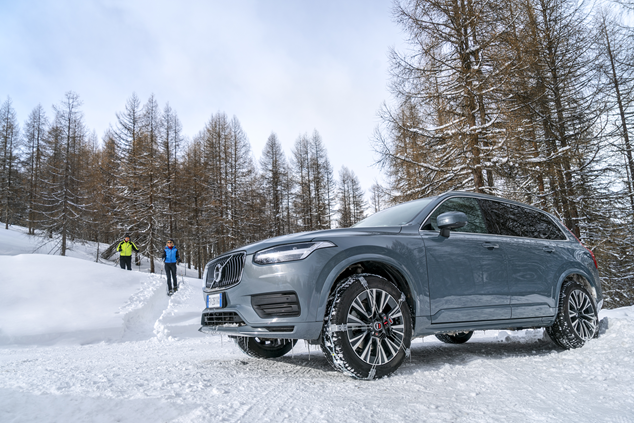
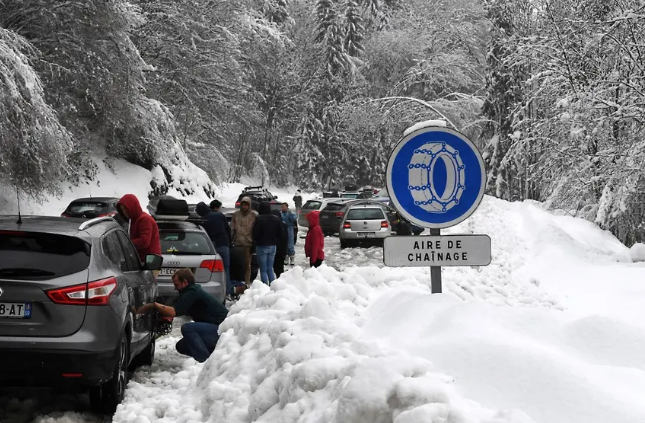
Snow Chains and Snow Socks Using traction aids such as chains or socks dramatically improves grip on snow and ice, making a substantial difference when conditions deteriorate. Fit them when road conditions begin to compromise vehicle control, but remove them once they're no longer necessary. Click here to view our Car Snow Chains, SUV Snow Chains or Snow Socks.